goUp
goUp
goUp
goUp
goUp
goUp
|

|
|
This story has been restored from the magazine archive. The text is original; outdated contact details have been removed.
The Fly of April
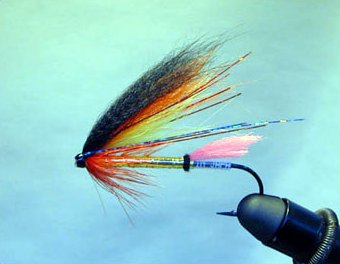
Niku's Tube
Text and Photos:
SFM-toimitus
Dressing: SFM-toimitus
Tubeflies
are flies for floody rivers. Specially they are good, when fishing spring
or autumn time salmons and seatrouts. They work in the sea, You can
fish with flyfishing equipments, but you can use even reel and rod.
Spinfluga is a metod with short (30 cm) leader for the weight and about
rod long leader for the fly. The weight leader should be the thinnest, so
you loose only the weight, when you have bottom touch. The large silhoutte
of a tubefly is very visible to the fishes in muddy waters, too. In a way
the tubeflies are the wobblers of flyfishermen.
Nikolai
Holttisen
has developped this fly specially for seatrout fishing in springtime
rivers. The basic dressing teqniue and mother models of foxflies are
originally from Sweden. There are some fine finesses, which help a tier,
in Nikolai's dressing style. This golden body, yellow-orange- black winged
tubefly has been excellent in seatrout fishing.
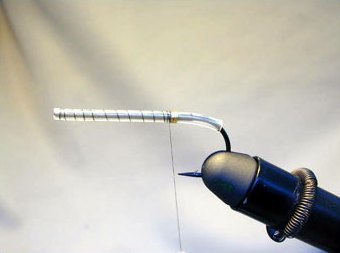
Fasten
the tube to the vise like in the picture with the help of a salmon hook.
Leave free room in the back about half an inch to set the treble hook.
Base the tube with thread and tie the tag with 4-5 rounds of oval golden
tinsel.
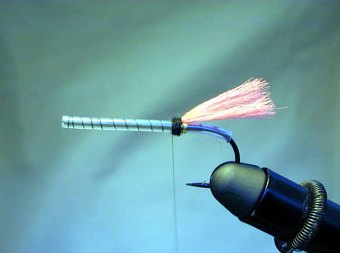
Tie
the tail of pinf polypropylene, and the butt of black wool. fasten the
oval golden tinsel.
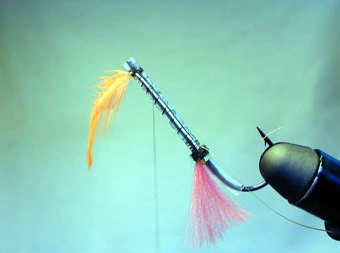
Fasten
the yellow hackle so, that the shaft stayes long under the whole body.
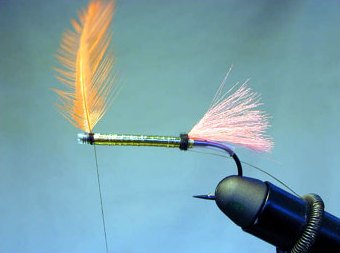
Tie
the body of flat golden tinsel.
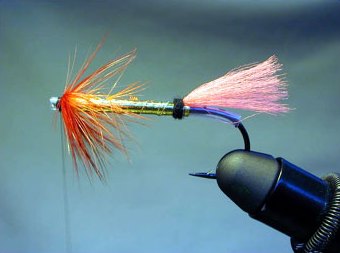
Tie
the bodyhackle on its place with the rib. Tie the fronthackle of red
hackle.
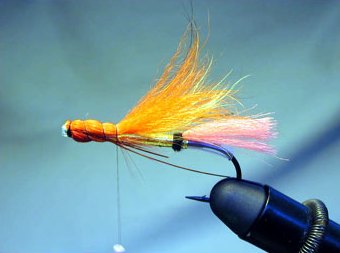
Tie
the underwing of yellow fox hairs. Let this level stay as one bunch, so it
helps the wing to hold up. Tie the middlewing of orange fox and spread
this level to the sides, too. Add two stripes of hologrammic flashabou on
both sides. The strips should be a bit different in length, so they do not
fasten to each other in water. When you hold the dressing like in the
picture, while working with the upperwing, you save many round of the
thread and the head will be nice and small.
Tie
the upperwing of black fox and spread it to the sides. Add again stripes
of flash on both sides. Use super glue to finish the head.
You can tie the middle-
and upper wings with following method, too. Then the foxhairs will be
under two layers of the thread and the fly is more durable.
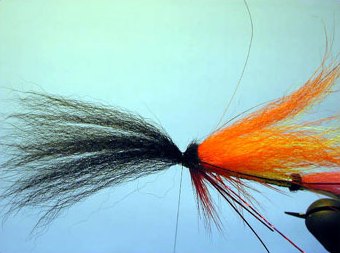
Fasten
the hairs so, that the tips are forward.
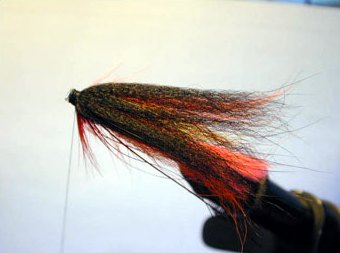
Bend
the hairs backwards and spread them to the sides, too. The head will be
larger, but the fly is more durable.
Dressing:
Tube:
A special tube by Hannu Lehtonen
Tag: Golden oval tinsel
Butt:
Black wool
Tail:
Pink polypropylene
Rib: Golden
oval tinsel
Body: Flat
golden tinsel
Bodyhackle: Yellow
cock hackle
Fronthackle: Red
cock hackle
Underwing: Yellow
fox and 4 stripes of hologrammic flashabou
Middlewing: Orange
fox and 4 stripes of hologrammic flashabou
Upperwing: Black
fox and 4 stripes of hologrammic
flashabou
This excellent new tubematerial used in this
dressing you can order from Hannu Lehtonen. He has a very good flytying
super glue, too.
Hannu Lehtonen:
|
|

|