Zander - Jigging is Effective
Published · Updated
This story has been restored from the magazine archive. The text is original; outdated contact details have been removed.
ZANDER – JIGGING IS EFFECTIVE
By SFM-toimitus
Early May begins the season for jigging zanders (=Pikeperch, Stitzostedion lucioperca). The hotest time is from Mid-May to the end of June. Even in July The catches with jigging-techniques may be compared with trolling catches.
Spinning or casting rods and reels in class 1 or 2 are the right equipment to fish zanders with jigging systems. The line should be between 0,20-0,30 mm (=4-12 lbs). Thinner line make fishing more sensitive, but thicker line allows even violent loosening of bait from bottom-catches. Modern microdyneema lines, as Fireline, are excellent choice. The line colour should be yellow or other good visibility colour, because fishing mostly happens in poor light conditions. It is a good sportmanship to have a priest, with which the catches are blessed for dinner-table. Plastic box or bucket is needed for storage the fishes, otherwise the mess in the boat is intolerable. It is a good habbit to show blood from the fishes. This easy operation keeps quality of the filees and the taste will stay delicate. Landing net is of course a must.
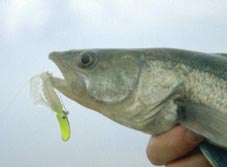
Both grub and shad tails in sizes 2 to 4 inches are effective. Important is to have a good collection of different colours. Yellow or fluorescent yellow are the starting colours. White, smoke or glass catch fish in daytime and afternoons. Chartreuse is a universal choice. When the evening grows dusky, orange tones have been hot. Nighttime, in the dark, both back and motoroil can fill the storagebox. Sometimes a little bit of extra smell is needed. A piece of worm on the hook can make the zanders crazy.
Round Jig heads is the hookening system in normal conditions. When fishing happens on difficult, stony bottoms, Erie-, StandUpKnothead- and Gravedigger-heads save too many losses of jigs. The colour of the jighead can be important. When the spawn is in hottest sessions, orange or red jigheads work perfect. Especially the male zanders stay in the spawning-areas to protect fertilized eggs. They get mad, when they see a crawling jig, which they think, is trying to steal the grains of spawn.
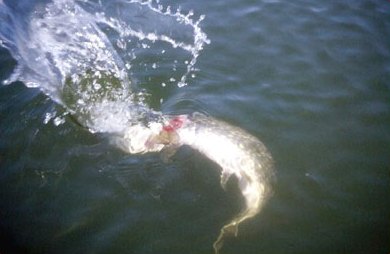
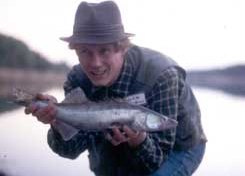
The end of May year2001, Bude and 2,5 kilos zander with fluoyellow grub
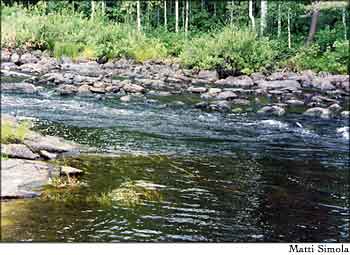
Zanders have their orgias in waterdepths between 1-3 meters (3-10 feet). Jigheads should not to be too heavy. Light heads from 4 to 14 grams (1/8 to ½ oz) allow the attractive swimming of the bait. Good catches can be made even in 0,5 meters (2 feet) dephts. If there is any kind of snapping when reeling in the jig, never take up the bait immediatly. Light vertical jigging near the boat often adds a mark in Your Fishing diary.