This story has been restored from the magazine archive. The text is original; outdated contact details have been removed.

Lesson 12: GREEN
BUTT
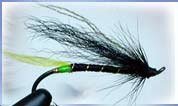
The last fly we tie in fly-tying school is Green Butt, which is a simple
hairwinged salmonfly. Though it is simple to tie, it is a very good and catching fly in
salmon fishing. Red Butt and Orange Butt are variations of this theme, and they are as
well as the Green Butt salmon flies worth fishing with.
Dressing:
Hook: Low water salmon 1/0-4
Tag: 4-5 turns oval silver tinsel
Tip: Green floss
Body: Black floss
Rib: 5 turns oval silver tinsel
Wing: Black hair (fox, bucktail or calf). Peacock colored crystal hair 2
stripes over
Hackle: Black cock as collar
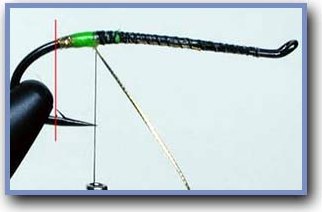
Base the shank to the tip of the barb. Fasten the tinsel and tie with 4-5
turns the tag. Tie with green floss the tip so, that it reaches the line of the point of
the hook.
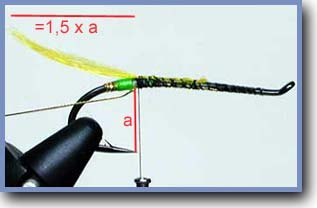
Tie a golden pheasant crest as the tail. In the picture the crest is
replaced with SLF-hanks. You can replace it with floss, too. The relations of a salmon fly
will be right, when the length of the tail is 1,5 times the wide of the gap.
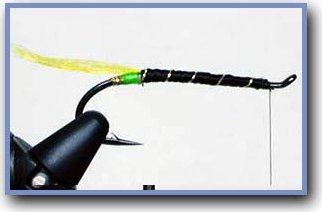
Tie the body with black floss. Fasten the floss in front and travel with it
to the back and again to the front. Tie the rib with 5 turns.
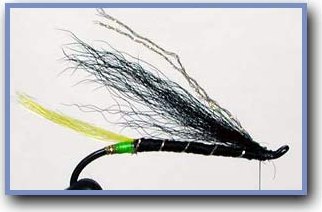
Tie the wing with black hairs ( calf, bucktail, fox ). The tips of the hairs
should reach the tip of the tail. Add on the wing two strips of peacock colored crystal
flash or similar.
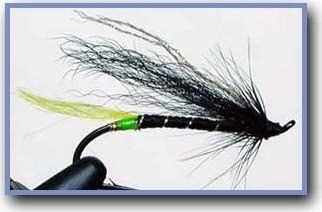
Tie a collar hackle with black cock. The length should be a bit longer than
the gap.
This is the last lesson of fly-tying school. You know now the basics of
fly-tying. In the future there will be the fly of the month article in SFM. Special
articles of tying different fly-types, the popular flies of various fishing places and the
favourite flies of flyfishermen will be published, too.
|